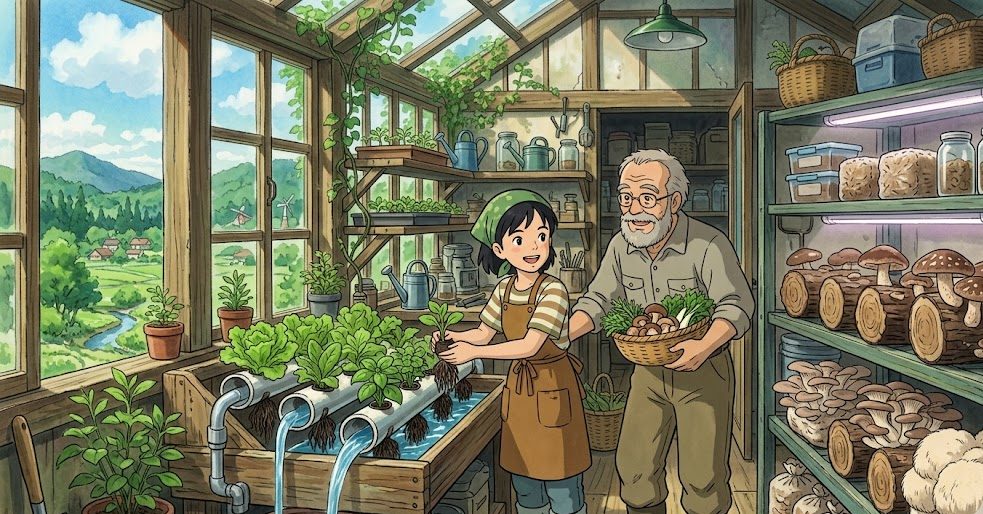
In the modern agricultural landscape, land and water are becoming increasingly scarce. Farmers are constantly looking for innovative methods that guarantee high yields regardless of soil quality or weather patterns. This is where Hydroponic and Mushroom Farming come into play—two of the most profitable, space-efficient, and sustainable farming methods available today.
Whether you are looking to maximize output on a small plot of land or launch a vertical farming business, this guide covers the essentials of turning these high-tech agricultural methods into a thriving, consistent revenue stream.
1. Hydroponics: The Future of Soil-Less Growth
Hydroponics is the art of growing plants without soil, using mineral-rich nutrient solutions in an aqueous solvent. Because the plant doesn’t have to search for nutrients in the ground, it can focus its energy on rapid growth and fruit production.
Why Hydroponics Wins
- Space Efficiency: You can grow plants vertically in shelves, meaning you can produce 5x to 10x more than traditional farming in the same footprint.
- Water Conservation: Hydroponic systems recirculate water, using up to 90% less than soil-based farming.
- Year-Round Harvest: With controlled environment agriculture (CEA), you are no longer at the mercy of the seasons. You can grow premium herbs and leafy greens 365 days a year.
Choosing Your System
For beginners, the Nutrient Film Technique (NFT) or Deep Water Culture (DWC) are excellent starting points. NFT is perfect for leafy greens like lettuce and spinach, while DWC is great for larger crops like peppers or tomatoes.
2. Mushroom Farming: Converting Waste into Gold
Mushroom farming is arguably the most efficient “recycling” business in agriculture. While plants need light, mushrooms thrive in dark, humid environments, making them the perfect partner for an integrated farm.
The Profitability Factor
Mushrooms require very little capital investment compared to other crops. They grow on “agricultural waste”—straw, sawdust, coffee grounds, or corn cobs—and can be harvested in cycles as short as 3 to 4 weeks.
Key Success Strategies
- Hygiene is Everything: Mushroom farming is more of a “lab” process than a field process. Sterilization of your substrate (the growing medium) is the single most critical factor in preventing contamination.
- Climate Control: Mushrooms require precise humidity (80%–90%) and ventilation. Investing in a low-cost humidification and exhaust system will drastically increase your yield.
- Species Selection: Oyster mushrooms are ideal for beginners due to their hardiness and fast growth, while Button or Shiitake mushrooms often fetch higher market prices if you have a stable local demand.
3. Creating a Synergy: The Integrated Farm
The ultimate mastery lies in integrating these two systems.
- CO2 Utilization: Mushrooms “breathe” in oxygen and release carbon dioxide. Hydroponic plants thrive on carbon dioxide. By housing your hydroponic vertical farm and mushroom grow-room in the same controlled facility, you create a natural gas-exchange cycle that boosts growth for both.
- Shared Infrastructure: Both systems require climate control (temperature and humidity). Sharing your cooling and heating costs across two different revenue streams significantly improves your ROI.
4. Business Mastery: Scaling for Profit
To treat your farm as a high-performance business, focus on these three pillars:
Market-Led Production
Don’t just grow what you like; grow what your local market wants. Before building a large-scale system, check with high-end restaurants, organic grocery stores, and local markets to see which exotic mushrooms or specialty greens have the highest demand in your region.
The “Data-Driven” Mindset
Successful modern farmers track every variable. Use a simple spreadsheet or app to log:
- Cost per gram (Electricity + Nutrient costs).
- Turnover rate (How fast can you cycle a batch?).
- Waste percentages. By optimizing these numbers, you can lower your overheads and significantly increase your profit margins over time.
Branding Your Produce
Since you are likely producing a premium, chemical-free product, position it as such. Clean packaging, professional labels, and a story about “Sustainable, Soil-Free Farming” allow you to move out of the “commodity” market and into the “premium” market, where price competition is much lower.
5. Overcoming the Challenges
Both hydroponics and mushroom farming have a learning curve.
- The Learning Phase: Do not start with a massive, expensive system. Start with a small pilot unit to learn how to manage nutrient levels (hydroponics) and humidity (mushrooms).
- Pest and Disease Control: While these systems are less prone to soil-borne pests, they are highly sensitive to “systemic” diseases. Strict sanitation is your best defense.
- Electricity Dependency: These are climate-controlled systems. If you live in an area with unstable electricity, investing in a solar-powered backup or an inverter is not optional—it is a business necessity.
Conclusion: A Resilient Path Forward
Hydroponics and mushroom farming represent the modern edge of agricultural productivity. By removing the dependency on weather, soil health, and land availability, you gain full control over your production. Start small, focus on the data, and scale your operations based on market demand. You are not just growing crops; you are building an efficient, year-round, high-profit enterprise.
Frequently Asked Questions (FAQ)
Q: Can I do both hydroponics and mushroom farming in the same room? A: You can, but you must keep them in separate zones. Mushrooms require high humidity and little light, while hydroponic plants need specific light levels and moderate humidity. Ensure your ventilation system separates the two environments while allowing air exchange.
Q: Which is more profitable? A: Both offer excellent returns. Mushrooms have a faster turnover rate (less than a month), whereas hydroponics often commands a higher price per unit for specialty herbs and greens. Combining them is often the best strategy for year-round income.
Q: What is the biggest mistake beginners make? A: The most common mistake is over-investing in expensive tech before learning the basic “biological” requirements. Start with a manual system to understand how the plants/mushrooms respond to different conditions, then automate as you scale.