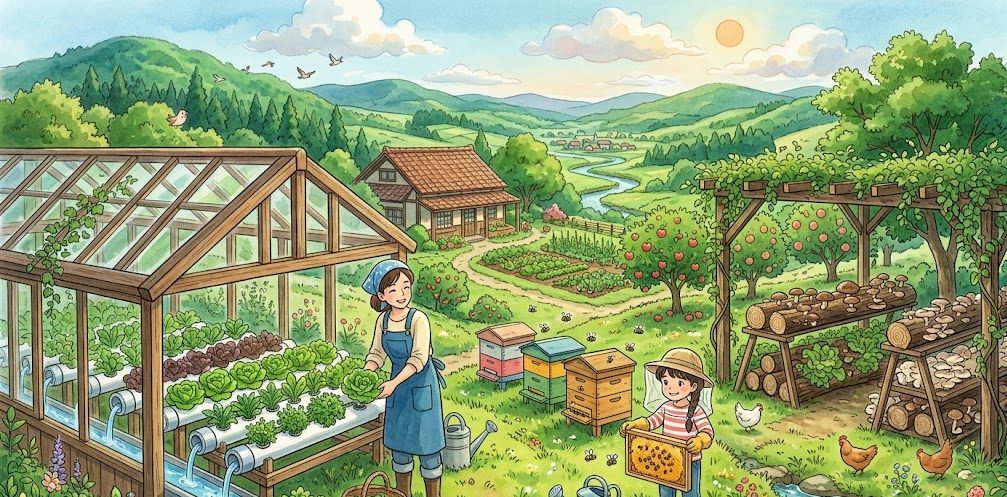
The dream of starting a farm has evolved. You no longer need hundreds of acres of rolling hills or heavy diesel machinery to become a successful producer. The modern farmer works smarter, often utilizing vertical space, symbiotic relationships, and controlled environments.
If you are looking to build a high-yield, diversified farm on a smaller footprint, the “Triple Threat” of agriculture—Hydroponics, Beekeeping, and Mushroom Cultivation—offers the perfect balance of sustainability and profitability. This guide breaks down how to master these three essential categories.
1. Hydroponics: Farming Without Soil
Hydroponics is the practice of growing plants in a nutrient-rich water solution. By removing soil, you remove soil-borne diseases and pests, allowing plants to dedicate all their energy to growth rather than searching for nutrients.
Core Systems to Consider
- Deep Water Culture (DWC): Best for beginners. Plants float on rafts with their roots submerged in oxygenated water. It is perfect for large heads of lettuce and bok choy.
- Nutrient Film Technique (NFT): A constant thin stream of water flows over the roots. This is the gold standard for herbs like basil and cilantro.
- Vertical Towers: If space is limited, vertical aeroponic towers allow you to grow 20-30 plants in the footprint of a single square foot.
Success Tips for Hydroponics
- Water Quality is Everything: Always start with filtered water. Use a pH meter to keep your solution between 5.5 and 6.5.
- Oxygenation: Roots need to breathe. Use high-quality air stones to prevent “root rot,” which occurs when water becomes stagnant.
- Lighting: if growing indoors, invest in Full-Spectrum LED grow lights. Aim for 12–16 hours of light daily to mimic the peak summer sun.
2. Beekeeping: The Heartbeat of the Farm
Beekeeping (Apiculture) is the ultimate “passive” farming activity that provides massive active benefits. Not only do bees provide honey and wax, but they also increase the yields of any surrounding flowering plants through pollination.
Getting Started with Your First Hive
- The Equipment: You will need a Langstroth hive (the standard stackable box), a smoker to calm the bees, and a protective suit.
- The Bees: Most beginners start with a “package” of bees or a “nuc” (a small, established colony) of Italian or Carniolan bees, known for their gentle temperament.
Essential Tips for Success
- Location Matters: Place your hives facing South or Southeast to catch the morning sun, which “wakes up” the bees earlier to start foraging. Ensure they are near a consistent water source.
- The “Varroa” Factor: The biggest challenge for modern beekeepers is the Varroa mite. Regularly check your hives and use organic treatments to keep the colony strong.
- Harvesting Patience: Don’t harvest honey in the first year. The bees need those stores to survive their first winter. Your reward will come tenfold in the second season.
3. Mushroom Cultivation: Turning Waste into Gold
Mushrooms are the decomposers of the world. They grow on “waste” products like sawdust, straw, or even coffee grounds, making them one of the most eco-friendly crops you can produce.
Popular Varieties for New Farmers
- Oyster Mushrooms: The easiest for beginners. They grow fast, are very hardy, and come in beautiful colors like pink, blue, and golden.
- Lion’s Mane: A gourmet and medicinal favorite that fetches a high price at farmers’ markets.
- Shiitake: Best grown on hardwood logs, offering a long-term, sustainable harvest.
The “Growshed” Setup
- Inoculation: Mix your mushroom “spawn” (seeds) with a sterilized substrate (like pasteurized straw).
- Incubation: Keep the bags in a dark, warm place while the white mycelium “colonizes” the substrate.
- Fruiting: Once the bag is white, move it to a “fruiting chamber” with high humidity (80-90%) and fresh air exchange. This triggers the mushrooms to “pop” out.
4. Creating the Synergy: How They Work Together
The true magic happens when you integrate these three distinct categories into one ecosystem.
- Bees and Hydroponics: If you have a greenhouse for your hydroponics, keeping bees nearby ensures that any flowering crops (like peppers or strawberries) are perfectly pollinated.
- Mushrooms and Plants: Mushrooms exhale Carbon Dioxide (CO2). Plants “breathe” CO2 and exhale Oxygen (O2). By venting your mushroom grow room into your hydroponic greenhouse, you create a natural “turbo-boost” for plant growth.
- Waste Management: The spent mushroom compost (after you’ve harvested the mushrooms) is an incredible soil conditioner for any traditional garden beds you may have on the side.
5. Economics: The Path to Profitability
Starting a farm is an investment. Here is how the revenue streams typically break down:
| Category | Primary Revenue | Secondary Revenue |
|---|---|---|
| Hydroponics | Fresh Greens/Herbs | Seedlings / Starter Kits |
| Beekeeping | Raw Honey | Beeswax, Propolis, Royal Jelly |
| Mushrooms | Gourmet Mushrooms | Dried Mushrooms, Grow Kits |
Export to Sheets
Market Strategy: Focus on the “Hyper-Local” trend. Chefs and high-end restaurants prize mushrooms and greens that were harvested just hours before delivery. Use clear, minimalist packaging to highlight the cleanliness and quality of your produce.
6. Common Pitfalls to Avoid
- Over-complicating: Start with one system. Master Oyster mushrooms before you try Lion’s Mane; master Lettuce before you try Strawberries.
- Ignoring Humidity: Both mushrooms and bees are sensitive to environmental shifts. Invest in a digital hygrometer to monitor your spaces.
- Skipping Documentation: Keep a “Farm Log.” Track your pH levels, your hive activity, and your mushroom harvest weights. This data is what transforms a hobby into a professional enterprise.
7. Conclusion: Your Journey Begins Today
Starting your own farm is about more than just food; it’s about taking control of your supply chain and participating in the cycle of life. Whether you are setting up a hydroponic rack in your garage, a beehive in your backyard, or a mushroom tent in your basement, you are becoming part of the solution for a sustainable future.
The learning curve is steep, but the rewards—tasting that first drop of your own honey, clipping a bunch of crisp hydroponic basil, or harvesting a cluster of pearly oyster mushrooms—are incomparable.
Start small, stay consistent, and watch your farm grow into a thriving, integrated ecosystem.